Skins
To peel, or not to peel, that is the question. Assessing the skin of a fruit or vegetable is the first preparatory hurdle for nearly every dish we make. As per usual, there are few one-size-fits-all solutions. No matter the path, there’s always a rub.
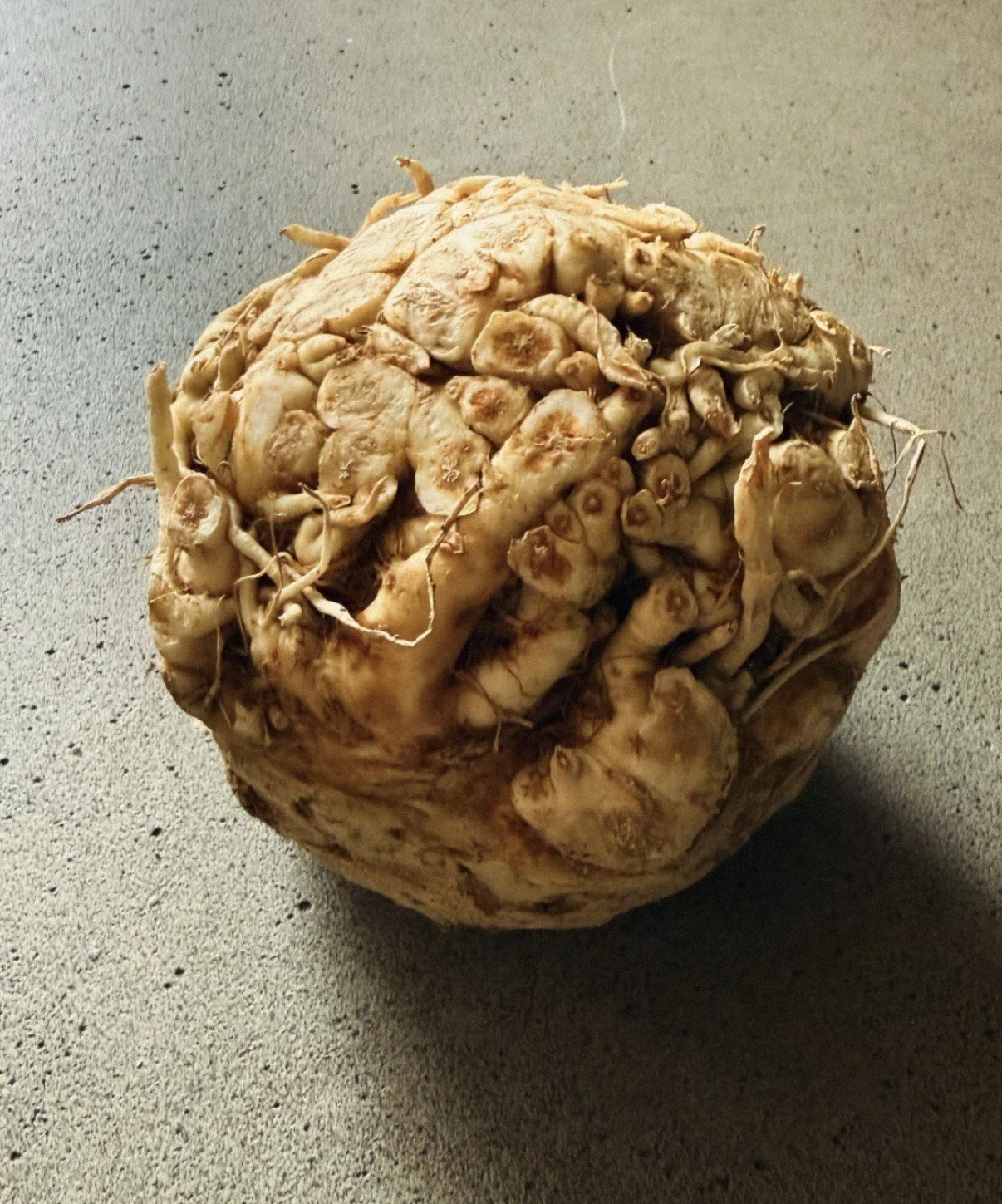
For certain vegetables, there is a clear answer. Yes, we’re going to remove the disheveled, nearly impenetrable armor of that celeriac bulb. But for others, it’s a question of flavor (usually bitterness) or how it will affect the final texture of a sauce.
This week at Aster Pantry we had a tomato sauce duel. Mac made a sungold sauce vierge, a favorite for salmon, and I made a nectarine and heirloom tomato salsa to brighten up some pork carnitas tacos.
The sungold sauce vierge is a raw preparation, somewhere between a sauce, a salsa, and a vinaigrette. Preparation involves simply dicing the sungolds (a light orange, sweet-tart cherry tomato) and combining them with herbs, vinegar, and olive oil.
To avoid peeling something, chop it finely. When it comes to tough, chewy, papery, or otherwise fibrous skins, surface area matters. Sever the fibers.
For my salsa, I decided that the tomatoes and nectarines wanted some char (probably because Mac and I spent last weekend at Griffin Creek Farm helping the events team from Restaurant Homer char a mountain of vegetables over an applewood fire - mighty fine shindig). The grill didn’t have much effect on the nectarine skins, but it caused the tomatoes to blister, curl, and separate. So, I slipped the peels off before dicing.
The more you cook something, the more noticeable the skin becomes. The interior of the tomato quickly breaks down while the skins roll up and retain an unpleasant leathery texture. This is why we use whole peeled tomatoes to make a fine marinara sauce.
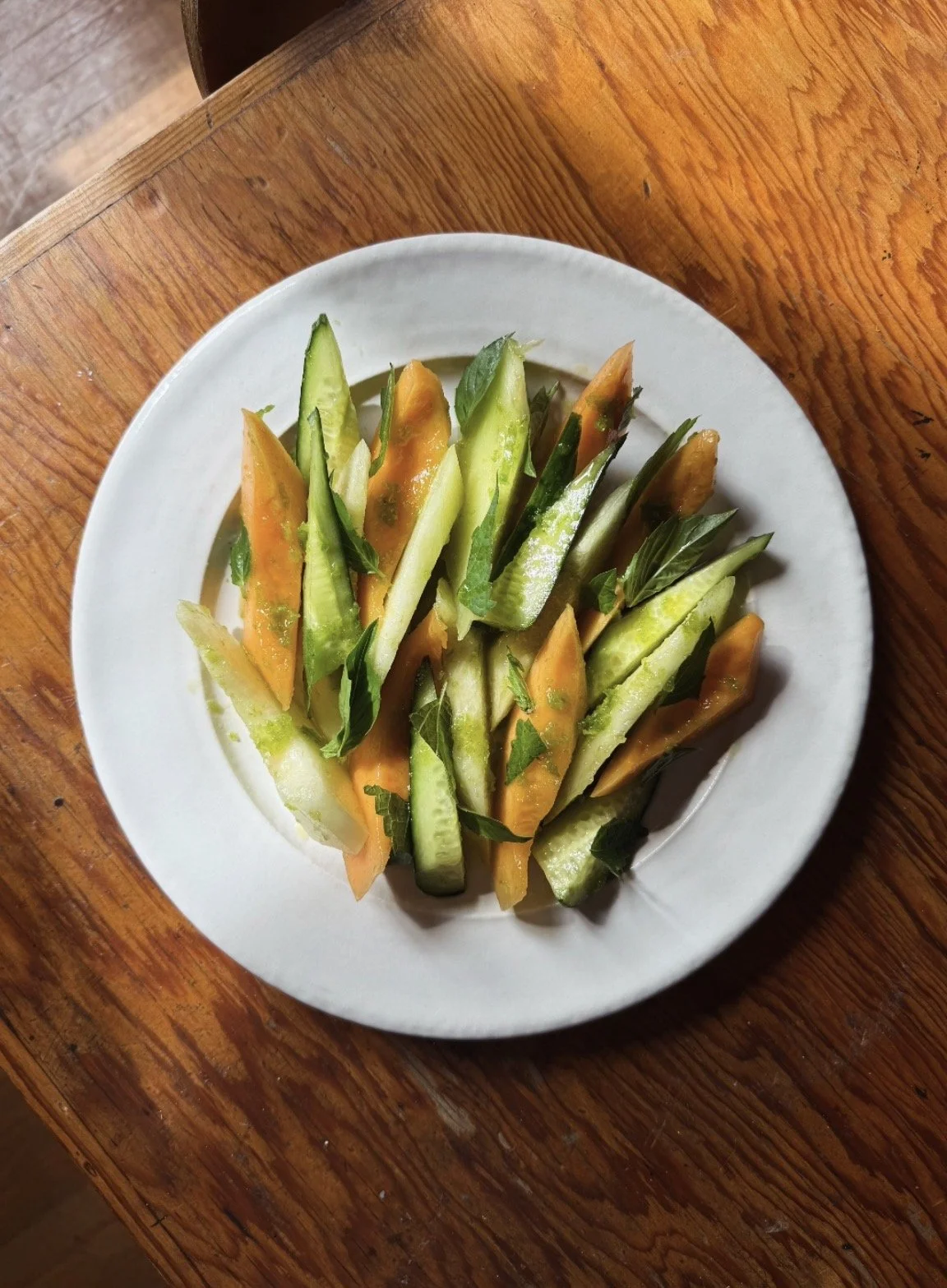
For raw preparations, size and maturity are usually good indicators for whether to peel. Small, young cucumbers have more delicate skins, which we often leave intact, but large ones are tougher and more bitter.
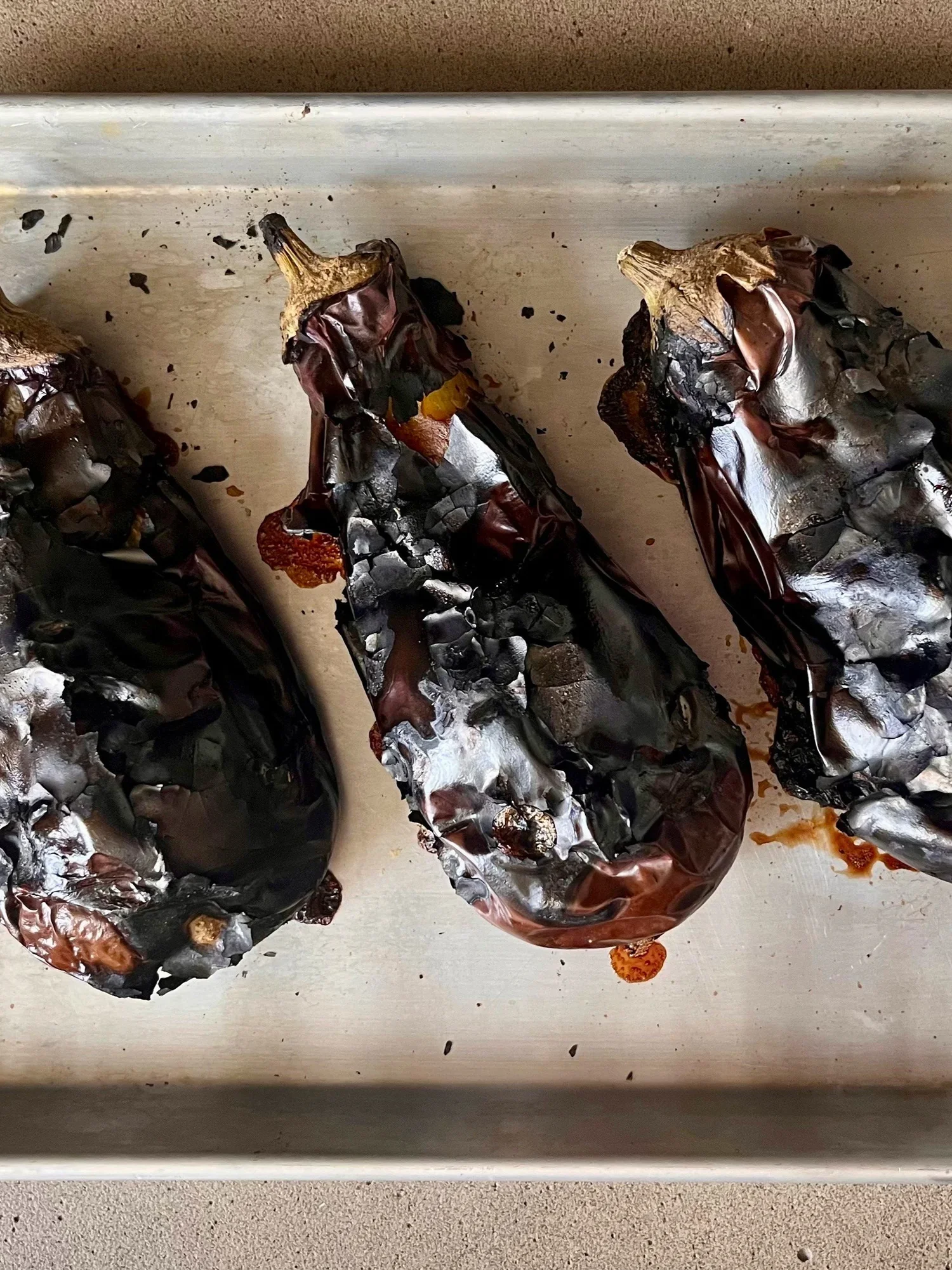
Many of our favorite vegetables are not easily peeled with a peeler. Some particularly robust skins require a sharp knife (I’m looking at you celeriac). For nightshades like eggplant and peppers, burning is the best way. Char the exterior until black, wait until they’re cool, then easily slough them off. Now you’re ready to make baba ganouj and muhamara, two of our desert island dipping sauces.
I am a big proponent of using a spoon to peel ginger (the terrain is too knobby for a peeler), but Mac feels extremely meh.
A final note: there is something I call the Vitamix exemption. A Vitamix is such a powerful blender that it can turn almost anything into a completely smooth puree. So if I’m too lazy to pass my apples through a food mill (apple sauce) or burn, steam, and peel my red bell peppers (muhamara), I use the Vitamix to vaporize them.
We’re glad you’re cooking with us.
Cheers,
Sten and Mac
KITCHEN TIP
Buy a Y-peeler. The pulling motion and visibility are superior to the traditional vertical setup. There is no counter argument.
EXPLORE MORE