Celeriac
Is that the heart of the forest god? Or maybe it’s just an incredibly dirty croquet ball? It certainly can’t be edible. That’s what I thought the first time I saw a celeriac bulb. But underneath all that tangled root fuzz is a core of culinary possibilities.
Celeriac, or celery root, is a cold weather storage crop. Frost intensifies its flavor, so peak harvest runs from late fall until early spring. Like many dense roots, it stores incredibly well, lasting for months and months in the refrigerator or root cellar.
The flavor is mellow, nutty, and slightly sweet. Like regular celery, though, it’s also herbaceous, with a parsley-esque freshness, even a little peppery. Preparation is all about breaking down its dense structure.
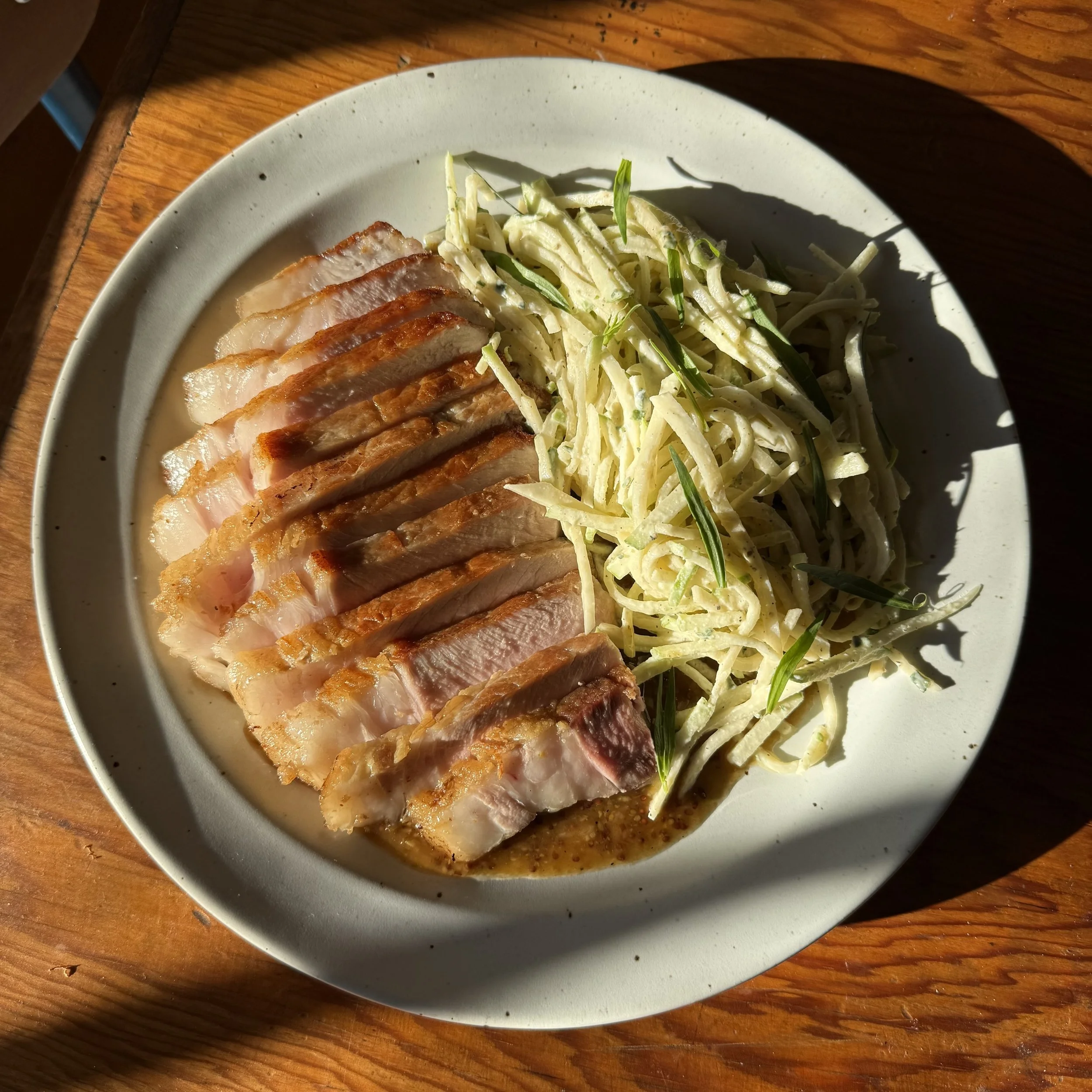
Thinly-sliced. Raw celery root adds a lovely crunch to a winter salad, as long as you slice it very thinly. This is easier said than done. For those unpracticed in breaking down rock-like roots, we recommend shredding with a box grater. The same goes for beets and daikon radish. Always try your ingredients raw, if you can - it helps frame your goals for cooking them.
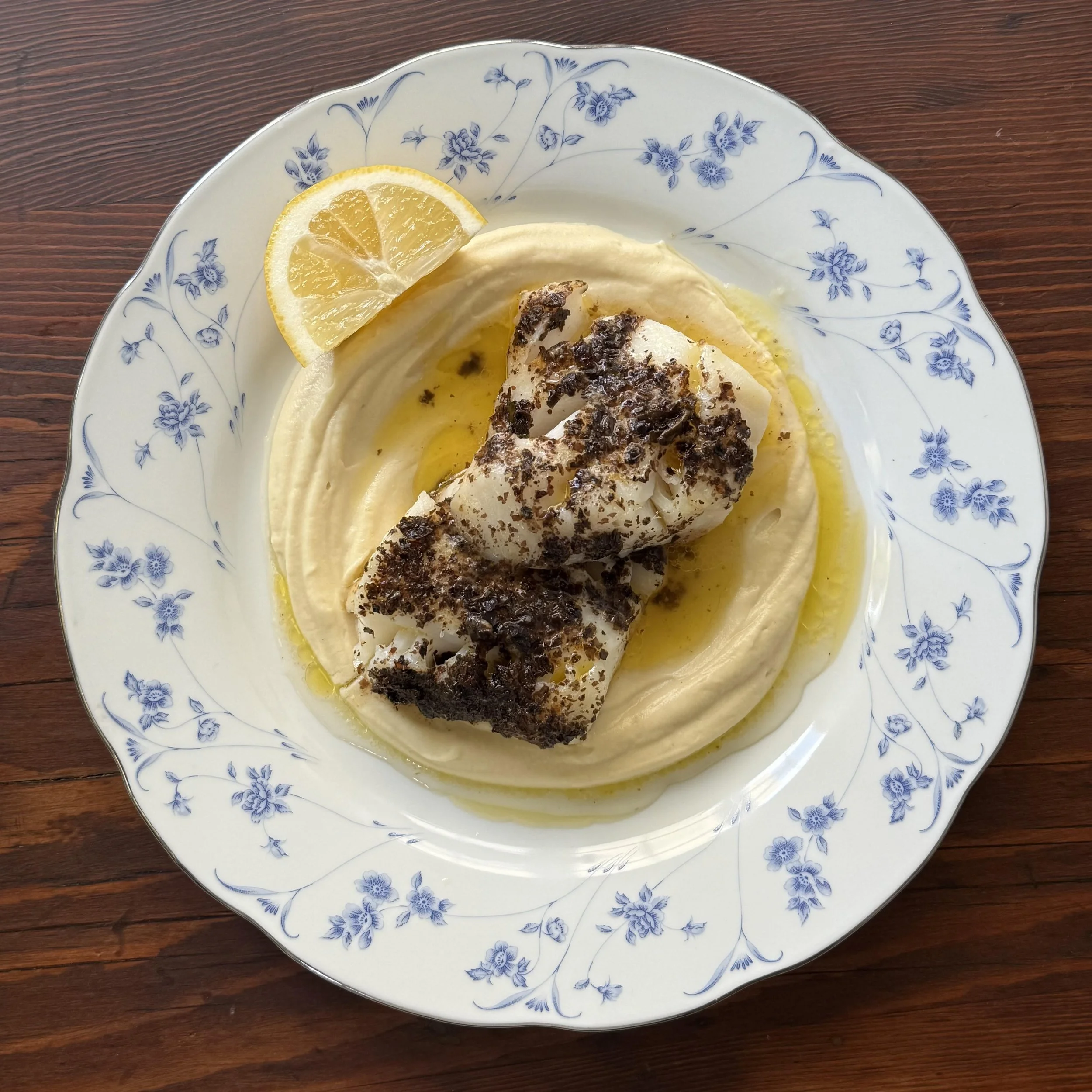
Pureed. The most common application. All you need is celeriac, cream, and salt. Break the bulb down into manageable pieces (smaller pieces cook faster) and simmer until tender. A thicker puree makes a sweeter, peppery alternative to mashed potatoes. This week we’re serving dover sole with celeriac puree and seaweed butter. Recipe drops on Friday.
Roasted. Ever had roasted sweet potato wedges? Similar idea. One New Year’s Eve at the restaurant, we had to make some last minute menu changes and ended up serving roasted celeriac wedges with brown butter and fermented serrano hot sauce. It was fantastic.
Regular celery stalks and celeriac bulbs are the top and bottom of the same plant. The grocery store versions, however, come from different cultivars which are bred to prioritize their respective characteristics. The stalks atop a celeriac bulb are a little more fibrous and a little more intense than traditional celery. Use them for stocks or mire poix.
We’re glad you’re cooking with us.
Cheers,
Sten and Mac
KITCHEN TIP
Peel celeriac with a knife. The skin is thick, tough, and uneven, making it nearly impossible for a traditional peeler. First, acquire a sharp knife. Cut off the top and bottom to create flat surfaces and a good starting point for your knife cuts. Then, cut down the sides, angling the knife gradually to follow the curve of the root.
You’re going to lose quite a bit of the celeriac flesh. There’s no way around it. The root end is so tangled that you have to cut off most of it. It’s better than having dirt in your puree, so be aggressive and don’t worry about it.
RELATED RECIPES