Florets
The family brassica has so many members that it’s hard to generalize about how to cook them. So today we’re focusing on floret-based brassicas: broccoli, cauliflower, and romanesco.
We group these three cultivars because their structures are similar - large crowns of tightly-bound florets with firm cores and woody stalks.
Controlling moisture is vital. The crowns are porous enough for water to enter but tight enough to retain it. That is to say, washing the heads is problematic. If you wash a head of cauliflower and roast it immediately, it’s basically going to steam itself mushy. If you must wash, it’s best to allow plenty of drying time (hours, not minutes). Or invest in a fan. Or leave it on the balcony.
High heat, direct heat. Floret-based brassicas love char. It’s a bummer for apartment folks, but a charcoal grill always yields a superior result. A heavy-bottomed skillet is the next best. If you’re roasting in the oven, crank it to 450℉ at least. If you’ve got convection, even better. I use a roasting rack to increase airflow - anything to help dissipate moisture.
Large sections. Roasting a cauliflower head whole is fun, but it does take awhile. I usually slice the heads vertically into four large slabs. This way I can char up the outsides while the interior parts remain creamy and tender. Break them down afterwards.
Pureeing. Florets make great soups. Roasting first adds that great brown flavor, but simmering them from raw is better for color. Try it both ways and see what you like.
Add dressings and seasonings at or near the end. Some oil and salt before roasting, yes, but leave other seasonings until the final minutes of cooking or after the heat is off. I like to finish florets with a quick toss in some brown butter, but it’s best if they’re already crispy.
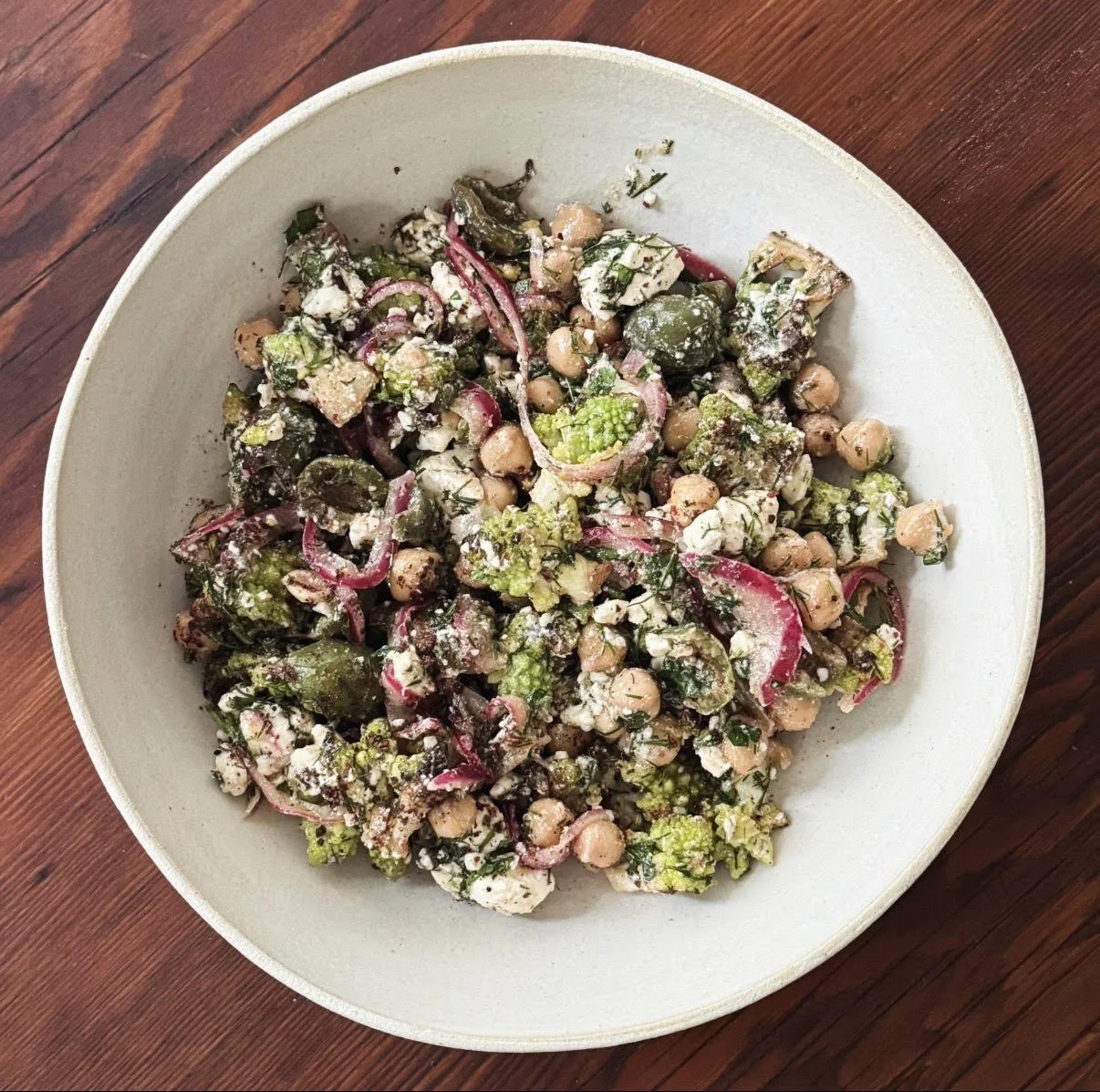
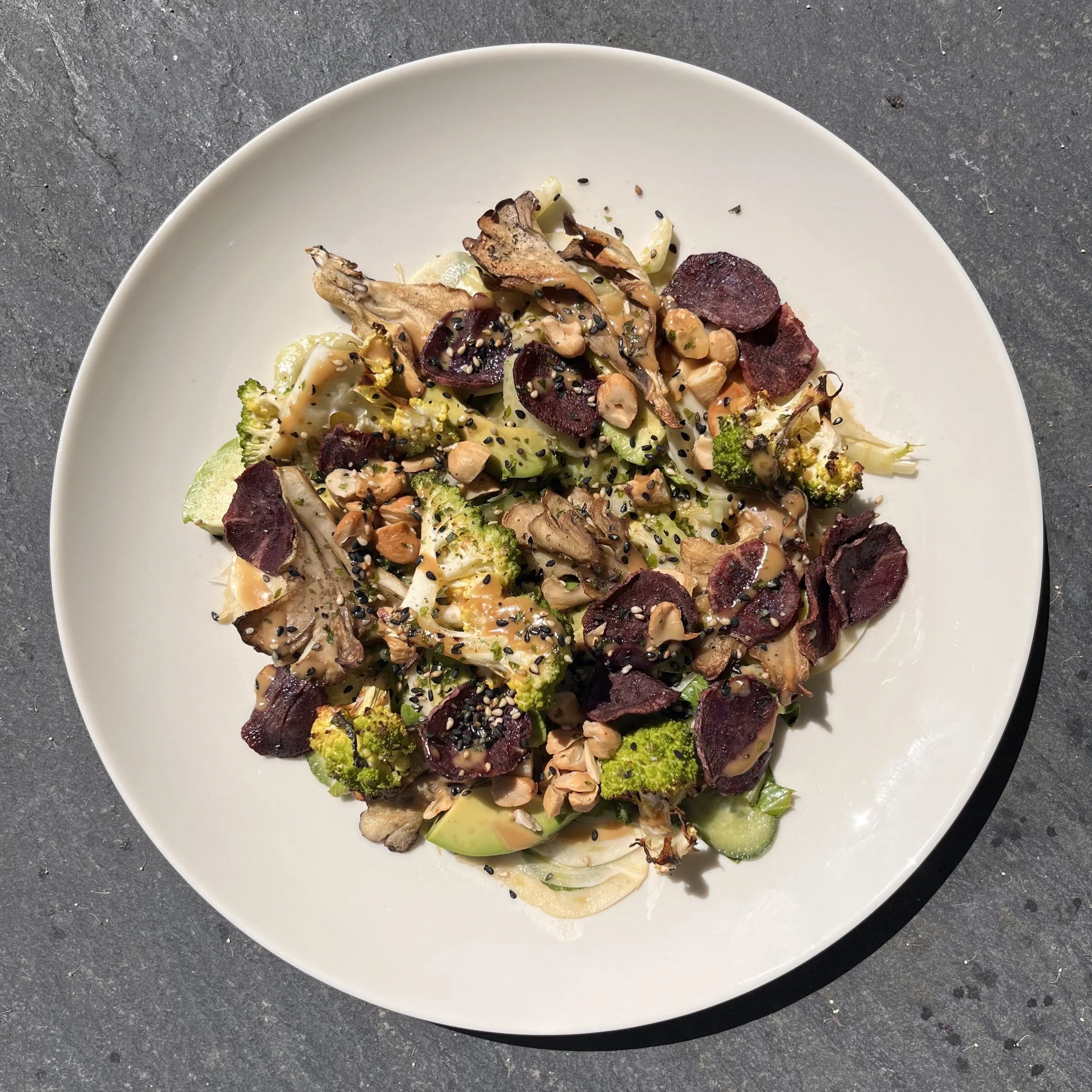
If you’re not familiar with romanesco - or as I like to call it, Nintendo broccoli - do yourself a favor and get friendly. It’s mild and nutty and delicious. No joke, the crowns look like little castles of pixelated onion-domes. This week we’re serving a charred romanesco spoon salad. Recipe drops on Friday.
We’re glad you’re cooking with us.
Cheers,
Sten and Mac
KITCHEN TIP
The cores and stalks are edible. They do, however, need special treatment. Cauliflower cores get super creamy when slow roasted or smoked. Treat broccoli stalks like extra sturdy carrots - slice them thinly, then pickle or sauté.
RELATED RECIPES