Salmon Basics
Seafood can be intimidating. The ocean is a wild place, and we need only revisit the deranged plots of countless movies - from Aquaman to Pacific Rim to The Pirates of the Caribbean franchise - to confirm that we humans will believe pretty much anything can rise from the deep.
But no more fiction. It’s time for the unknown to become known. Wild salmon is a treasured ingredient here in the Pacific Northwest, a fantastic source of flavor and protein. Let’s go over some basics to make preparation a bit less scary.
Thawing. There’s nothing wrong with frozen fish. It’s an essential method for transporting a perishable wild product. Most meat and seafood at the grocery store arrives frozen. Mac and I actually prefer to buy our fish frozen and thaw it ourselves to ensure that it hasn’t already been sitting in the case for a few days. The best way to thaw is in the fridge overnight - no rushing. A slow thaw preserves texture and flavor. The second best way to thaw is under cold running water for 20-30 minutes (make sure the fish is sealed).
I’ve been told that, if your fillets are already portioned, you can cook them straight from frozen. I’m a bit skeptical, so I will be doing some testing (stay tuned on Insta). One thing’s for sure: low and slow is the way to go. 300°F (or less) in the oven, or the cool side of the grill.
Speaking of frozen fish, it’s worth noting that “sashimi-grade” is not a real designation. It’s something they write on the chalkboard to make you feel better. In reality there’s just a general spectrum of quality. If you’re planning to make crudo, find a reputable fishmonger and buy what they recommend. Flash freezing is often part of the calculation - it kills microorganisms.
Limit moisture when storing. It’s best to buy fresh fillets the day you’re going to use them. If you must store fish for longer, it’s important to unwrap it. Put it in a container with some room to breathe, and specifically, face the skin up so it can dry out (keep reading to learn about searing). A grate or resting rack is useful for this. Check out The Whole Fish for a deeper exploration on treating fish more like meat.
Pin-boning. One of the reasons salmon is so amazing is that it needs very little prep. If you buy a scaled fillet, all you really have to do is portion it. And take out the pin bones. You’ll need a fish tweezers. I like to use a little precision dental pliers I got from my dad. The pin bones run in a single line - feel for it with your finger. Gently pinch either side of each pin bone and use your tweezers to pluck it out.
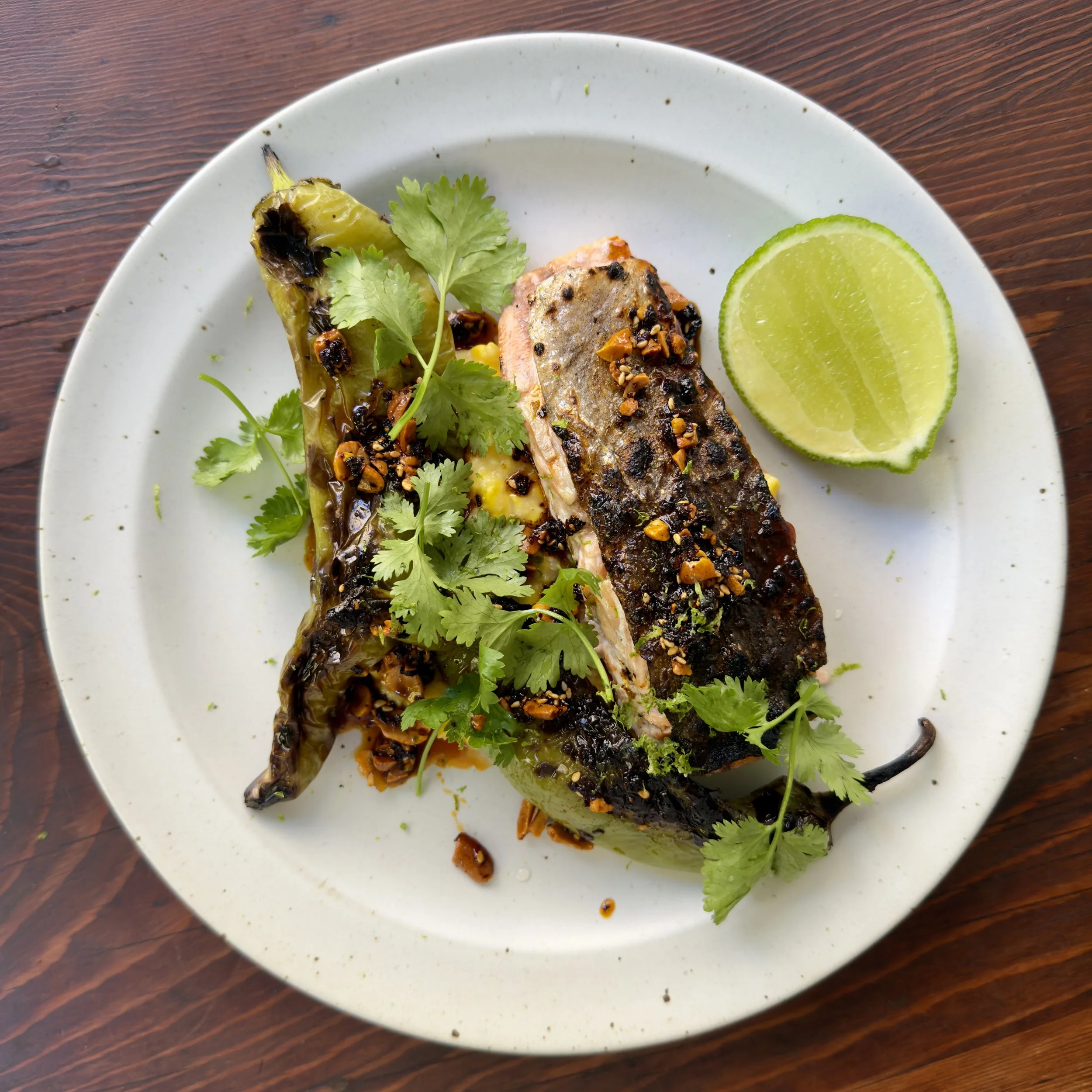
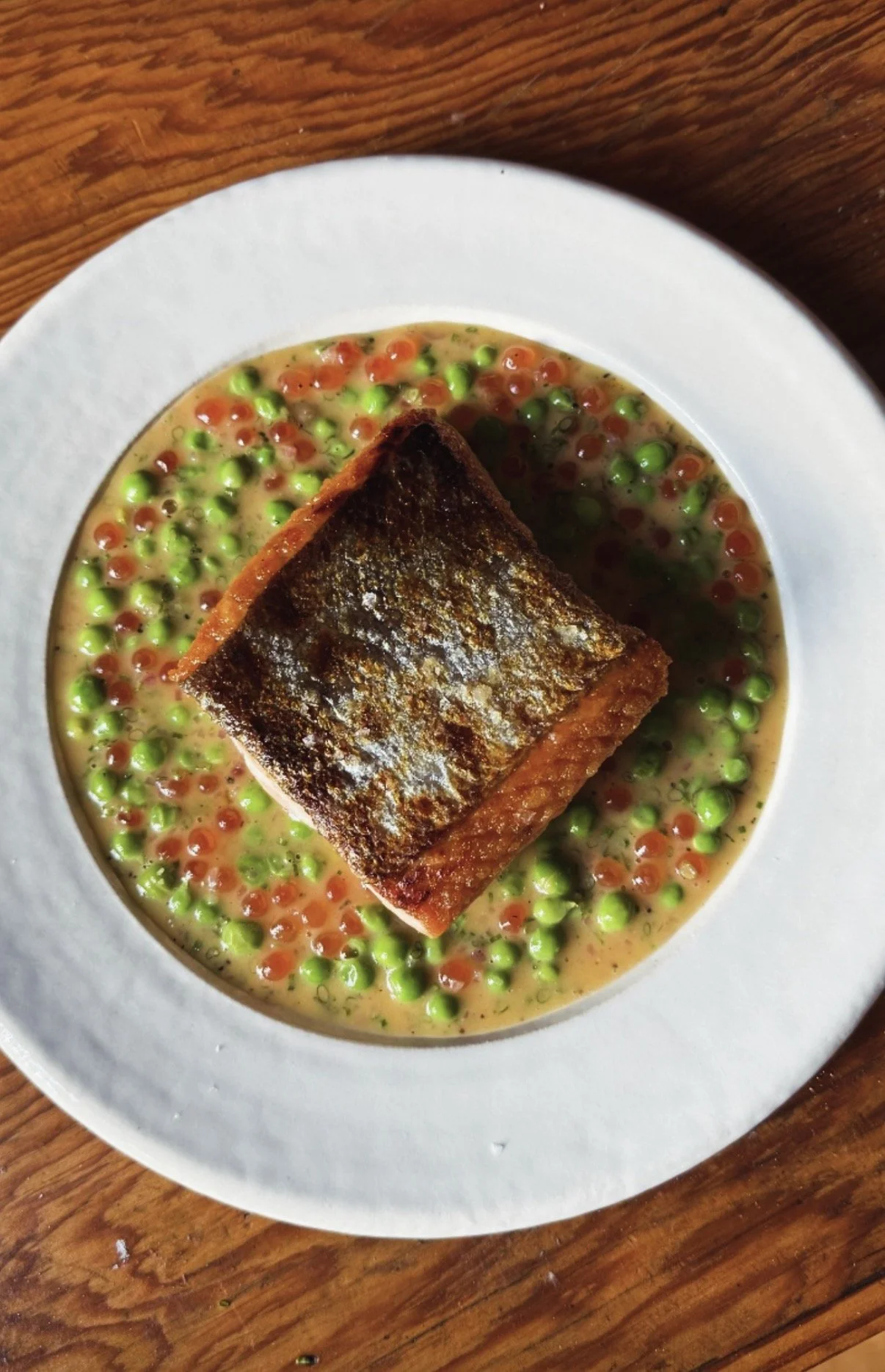
Searing. Crispy skin is the name of the game. Moisture is the enemy (it helps if we store our fish properly). Pat the skin dry. Get your skillet hot. Add a thin layer of neutral oil. Cook the fillet, skin side down, for three minutes, then transfer to a low oven (275-300°F). No need to flip. Cook until the salmon reaches an internal temperature of 120°F.
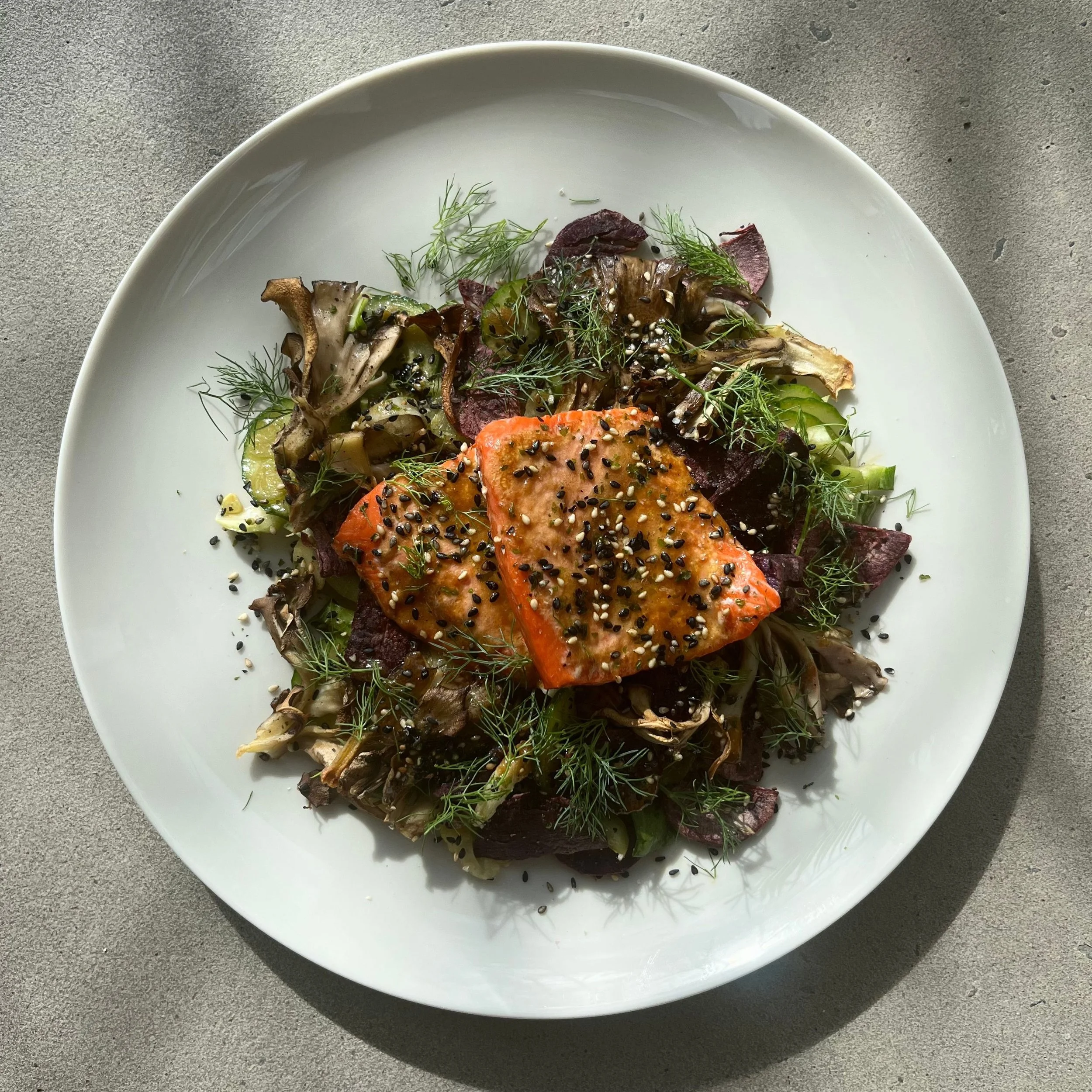
Keep it simple. Salmon has its own flavor. Don’t overthink your seasonings. A little salt, a little lemon, maybe some dill or other herbs. There’s certainly plenty of room to experiment (blackened, berbere-spiced, teriyaki, etc), but it’s important to know that you don’t have to.
Keeping it simple also applies to the rest of the dish. I often go by color. We’ve already got something orange. Then I just pick something green - steamed bok choy, roasted broccoli, or a salad - and something beige - rice, noodles, or a potato. If you can add something pickled, that's absolute perfection.
We’re glad you’re cooking with us.
Cheers,
Sten and Mac
EXPLORE MORE