Rice
Staple foods are woven into every culture. They’re part of the fabric, intertwined with language, climate, and technology: forces that shape perception. In western cultures, for example, dough and bread are slang for money. Just some food for thought.
Half the world survives on rice. Like its cousins wheat and corn, rice is a grass (cereal) cultivated for its edible seeds (grains). There are thousands of rice varieties, most of which are cultivars of a single species (oryza sativa), domesticated a very, very long time ago in what is now China.
Buckle up. I have a lot to say about rice.
Jasmine. If you ask Mac, this Thai superstar is your go-to rice. It’s aromatic, with popcorn-like notes, and rare among long grain rices, it falls midway on the fluffy-to-sticky spectrum. On the fluffy side, it’s good for flavored rice dishes which require thicker cooking liquids (like purees or coconut milk), whereas stickier rices get soggy. On the sticky side, it holds together (somewhat) when eaten with stews and curries.
Japanese. If you ask me, medium grain Japanese rice is your go-to rice. If it’s not plump and sticky enough to eat with chopsticks, I don’t want it. There are many varieties. Nishiki and Kokuhu Rose - commonly available and California grown - are solid choices. If you’re making sushi, you need sticky Japanese rice, the shorter the grain the better.
Arborio. The gold standard for risotto. A medium grain, high-starch Italian variety, arborio grains release their starches slowly as they cook, resulting in a creamy risotto. You can substitute other short or medium grain rices, but arborio is singled out for a reason.
Brown. Same species, less processed. Brown rice is just oryza sativa with the bran and germ left unmilled. In a shocking turn of events, it’s more nutrient dense than highly polished white rice. If, like me, you can’t live without the taste of white rice, consider a 50-50 blend. Since the grains have more structural integrity, brown rice is great for building hearty salads.
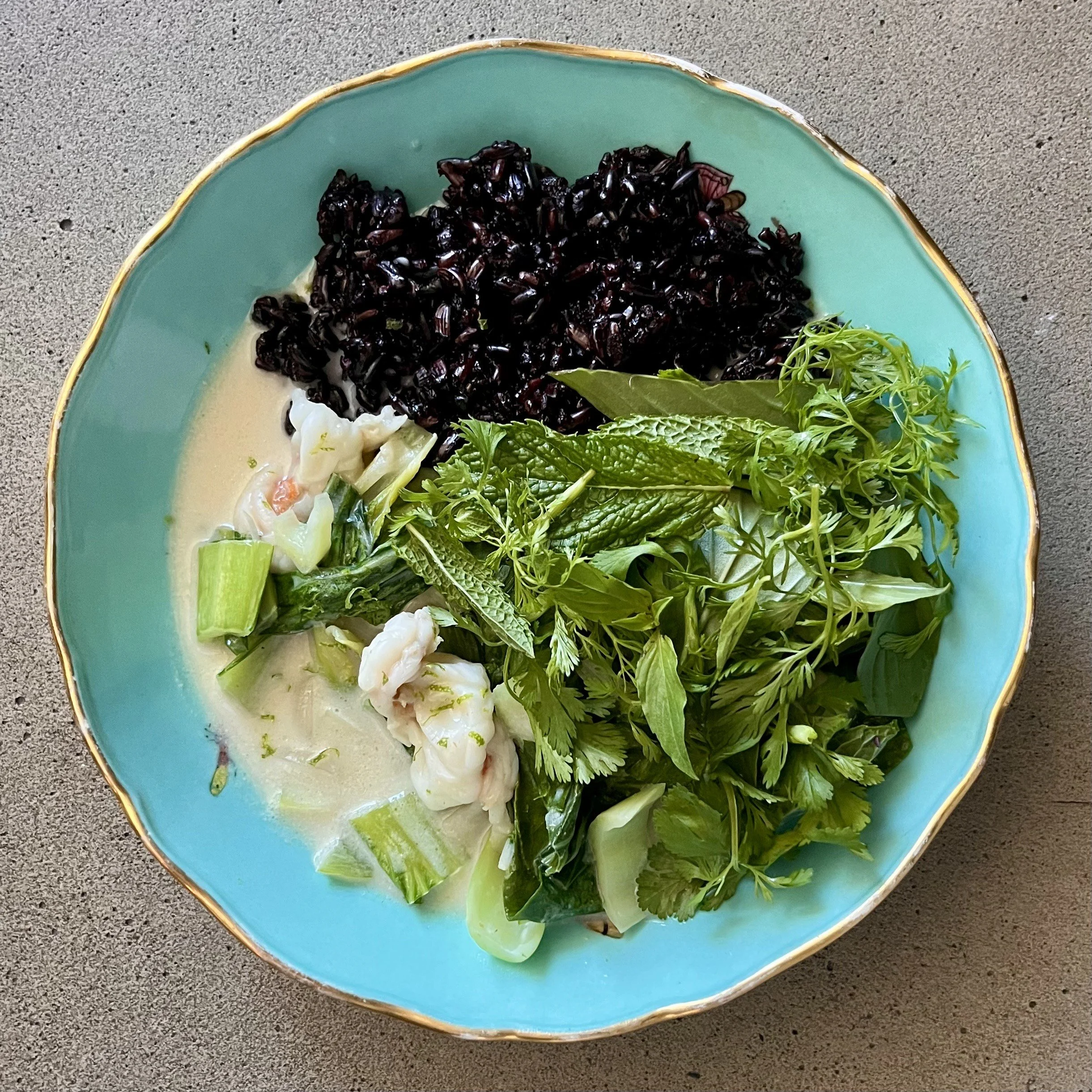
Black (aka forbidden or purple). It has a mild, nutty flavor and a nutrient density similar to brown rice (as the bran is left intact). But mostly I choose it when I want a fun color contrast. Cooked with coconut milk, it assumes a beautiful deep lavender hue similar to ube.
The wheat cousins. Farro, barley, and rye berries. To be clear, these are not rices, and they do contain gluten. But culinarily they often function like rice. The wheat cousins are sturdy, toothy, nutty, and don’t clump, so they’re also great for mixing into salads.
Wild rice. Another cousin, indigenous to the Great Lakes region of North America. It has a dark chewy bran, a tender grain, and a soothing earthy taste. Maybe I’m biased about the “soothing” part, but wild rice hotdish is a cornerstone of Minnesota cooking. The sturdy outer layer is also perfect for frying. Fried wild rice, flavored with green goop and served with sesame mayo and an herb forest, is an Aster Pantry favorite.
As with many seemingly simple tasks, like making an omelet, cooking rice is an art. I know several accomplished chefs who are still scared of cooking white rice on the stove. If you cook rice with any regularity, we highly recommend getting a rice cooker and following the instructions pretty much to the letter. Food scientists have spent decades perfecting them.
If you’re sticking to the stovetop, the established procedure is this: bring the rice and water to a simmer, stir, cover, reduce the heat to low, cook for X minutes (depending on the variety and the use), and then rest off the heat, still covered. There are 3 places where folks trip up.
One, err on the side of less water. There’s always residual water left after washing. For white rice, I never use more than 1 ½ cups of water for 1 cup of rice. Two, be gentle. Bring to a simmer, yes, but not a rolling boil, or you risk gummy, overcooked rice. Those with electric ranges beware because the burners don’t transition quickly. I usually fire up two burners - one high and one low - and then move the pot (don’t forget to turn the first one off). Three, don’t skip the last step. Take the pot off the heat and let the rice steam for 10 minutes before fluffing.
For wild rice and the wheat cousins, cook them like pasta (pasta that takes a really long time). Use at least 1 quart of water for every cup of rice. Boil, simmer, and then drain. You don’t have to be gentle with these. Wild rice and farro take about an hour. Rye berries can take up to two hours. Sometimes I even soak them overnight first.
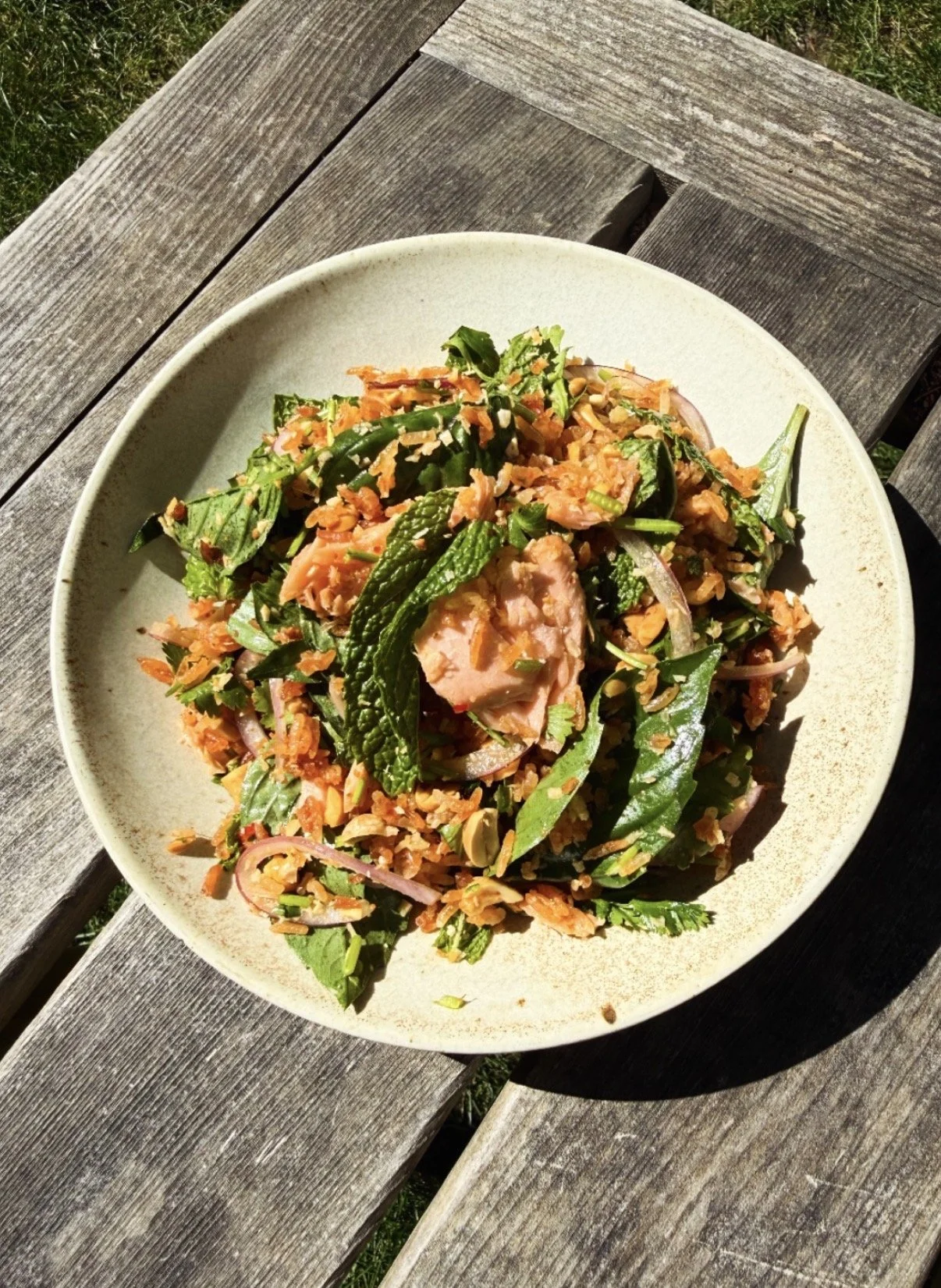
This week we’re serving a Lao-style crispy rice salad (nam khao) with coho salmon. It’s a punchy mix that hits just about every texture and flavor we can imagine - crunchy rice and peanuts, rich salmon, and an abundance of fresh herbs and lime. Pro tip: this is a dish for using up leftovers, so we highly recommend having rice bowls with salmon fillets the night before.
We’re glad you’re cooking with us.
Cheers,
Sten and Mac
KITCHEN TIP
Wash rice 3 times. Rinse the rice 3 times with plenty of cold water, gently agitating with your fingers, and drain through a sieve.
All relevant sources agree that it’s essential to wash rice before cooking. How many times? That’s the hundred dollar question. The purists (including my girlfriend) wash as many times as it takes until the water runs clear. This takes at least 10 minutes, and the returns are highly diminished after 5 washes. Unless I’m making sushi, I go with 3 and call it a day.
BOOK CLUB
Babel by RF Kuang. This novel was in the forefront of my mind when I was considering the inseparability of food, thought, language, and culture. Kuang’s conception of magic - derived at the ineffable nexus of translation between languages - is diegetically coherent in a pleasing, historically sharp, and original way. Also, unpacking the baggage of colonialism is always important. FYI, this novel has very little to do with food (directly, that is).
PRODUCT REC
Zojirushi. This trusted, acclaimed brand is the gold standard for Japanese rice cookers. I got one for Christmas. It’s called Neuro Fuzzy, and it sings to me. I love it. It has settings for many different varieties of rice and has lines for measuring water on the inside of the basin. Most importantly, it’s truly a set-it-and-forget-it appliance. After the rice finishes, it happily transitions to keeping warm for many hours.
PS We are not sponsored by Zojirushi.
Tiger (Japanese) also makes a nice rice cooker. Aroma (American) is fine, too.
EXPLORE MORE