Chili Crisp
All great writers plagiarize. One of my favorite English professors said this. Granted, he was being intentionally inflammatory to make a point (exact plagiarism is obviously bad), but the underlying truth is foundational. Nothing is completely new. Our creativity is the product of everything we’ve consumed.
Proprietary knowledge is especially problematic in the food world. Everyone cooks. Everyone eats. Multiplied by millenia (plus colonial extraction). It’s one of the main reasons why Mac and I decided to publish our recipes in front of the paywall.
Quality is about practice and execution, not secret recipes. A coworker once came back from a stage at another restaurant and informed us that they’d asked him to sign an NDA. We were shocked. It’s not like cooks get paid much. One of the main benefits is knowledge - exposure to new techniques and recipes - which you get to take with you. We advised him against taking the job (or frequenting that establishment ever again).
I’m not saying intellectual property isn’t important. But there’s a difference between charging for creative output and impeding the development of others. There are no self-made cooks. Beware of chefs who aren’t gracious teachers, who talk excessively about secret ingredients, or who otherwise withhold knowledge as a source of leverage.
This is all to say that David Chang is a loser for hassling small businesses over use of the term chile crunch. You can read up on all the irritating details here. Momofuku did not invent chili crisp, whatever you want to call it. Various iterations of chili oil have existed in East Asia for hundreds of years, since chilis came to China from the New World in the sixteenth century.
What we can all agree on is that chili crisp is great. Everyone should try every version of it they can get their hands on. Our favorite brands are the classic Lao Gan Ma and our local Seattle Kari Kari. The bold might want to try making it.
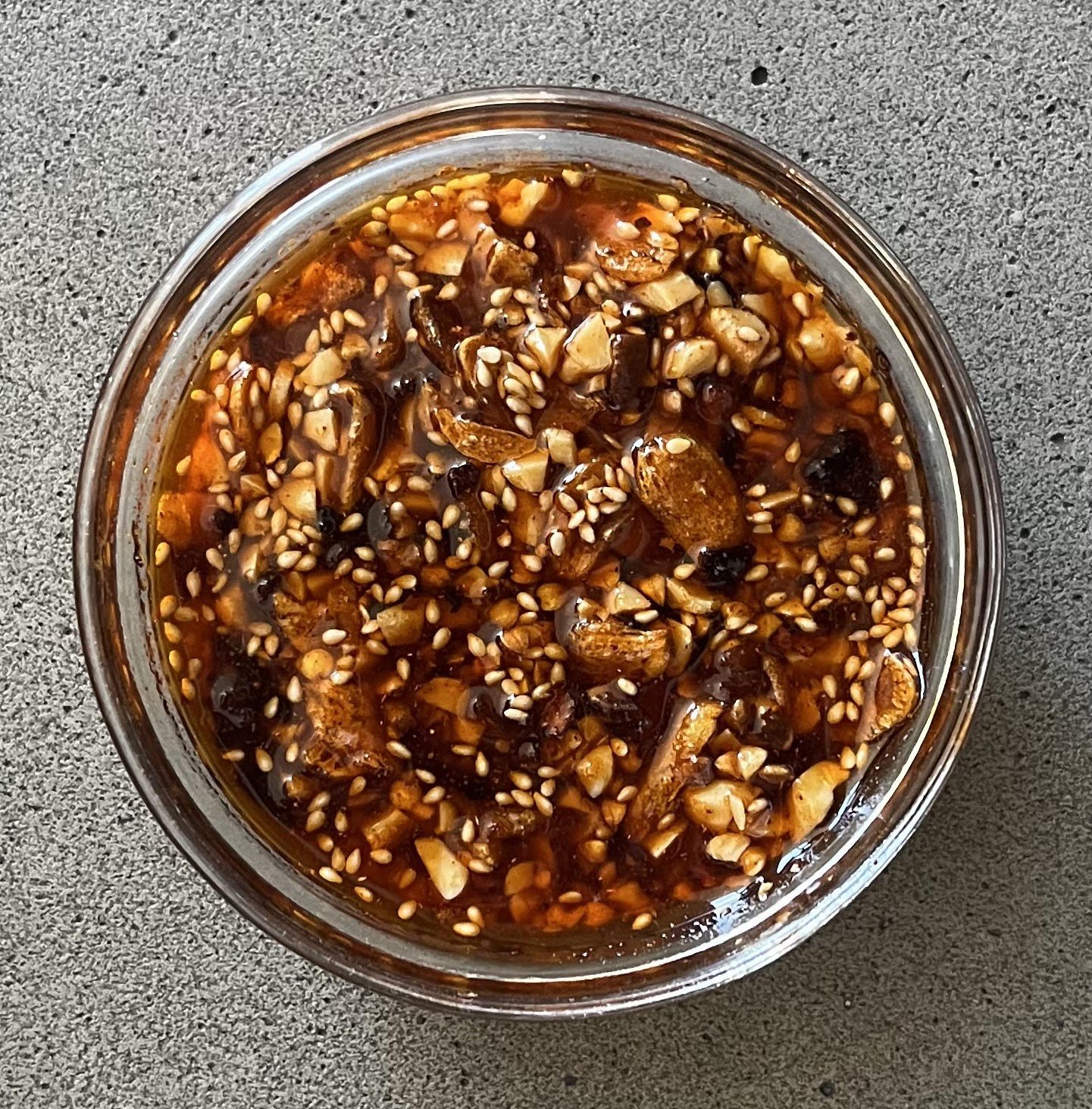
We love it because, like all the best garnishes, chili crisp provides both intense flavor and notable texture. Fat is the best medium to dissolve and distribute the flavors of aromatic compounds. That’s what chili crisp is: oil infused with onions, garlic, chiles, nuts, and seeds.
The hard part is getting the texture right. All the aforementioned ingredients burn quickly in hot oil. The process involves treating each ingredient separately for no more than a few minutes. We love salsa macha - a close, even older, relative of chili crisp from Mexico - in a variety of dishes. The first six times I made it, I burned it. So really I made it twelve times. Not a great average, unless you’re a baseball player. As I said, it’s all about execution.
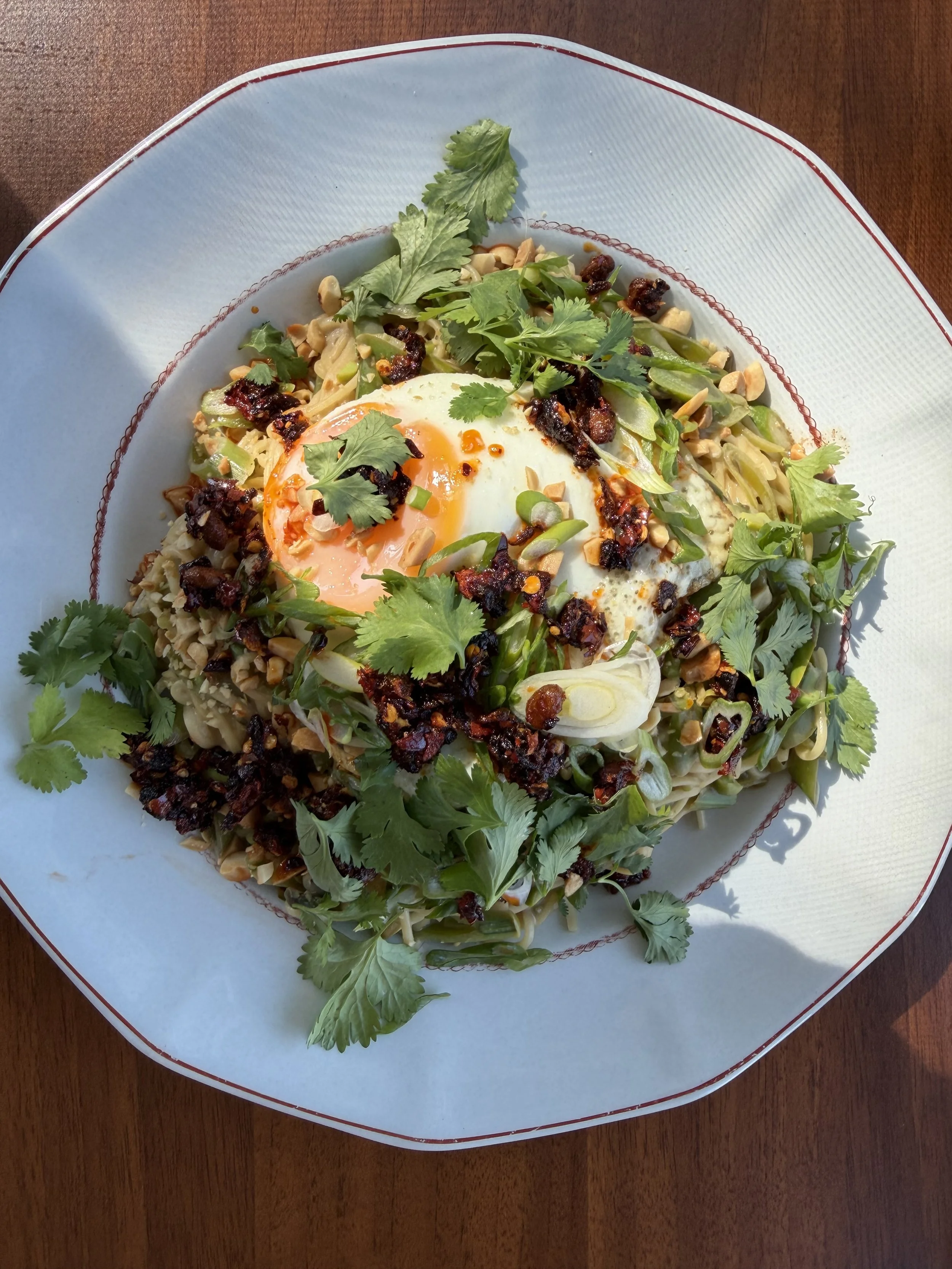
This week we’re serving a dish that Mac and I make for ourselves when we’re short on time: spicy sesame noodles with veggies - early spring veggies in this case - topped with cilantro, chopped peanuts, a fried egg, and you guessed it, chili crisp. Friday’s video will document my attempt to make this dish from start to finish in less than twelve minutes…
We’re glad you’re cooking with us.
Cheers,
Sten and Mac
EXPLORE MORE