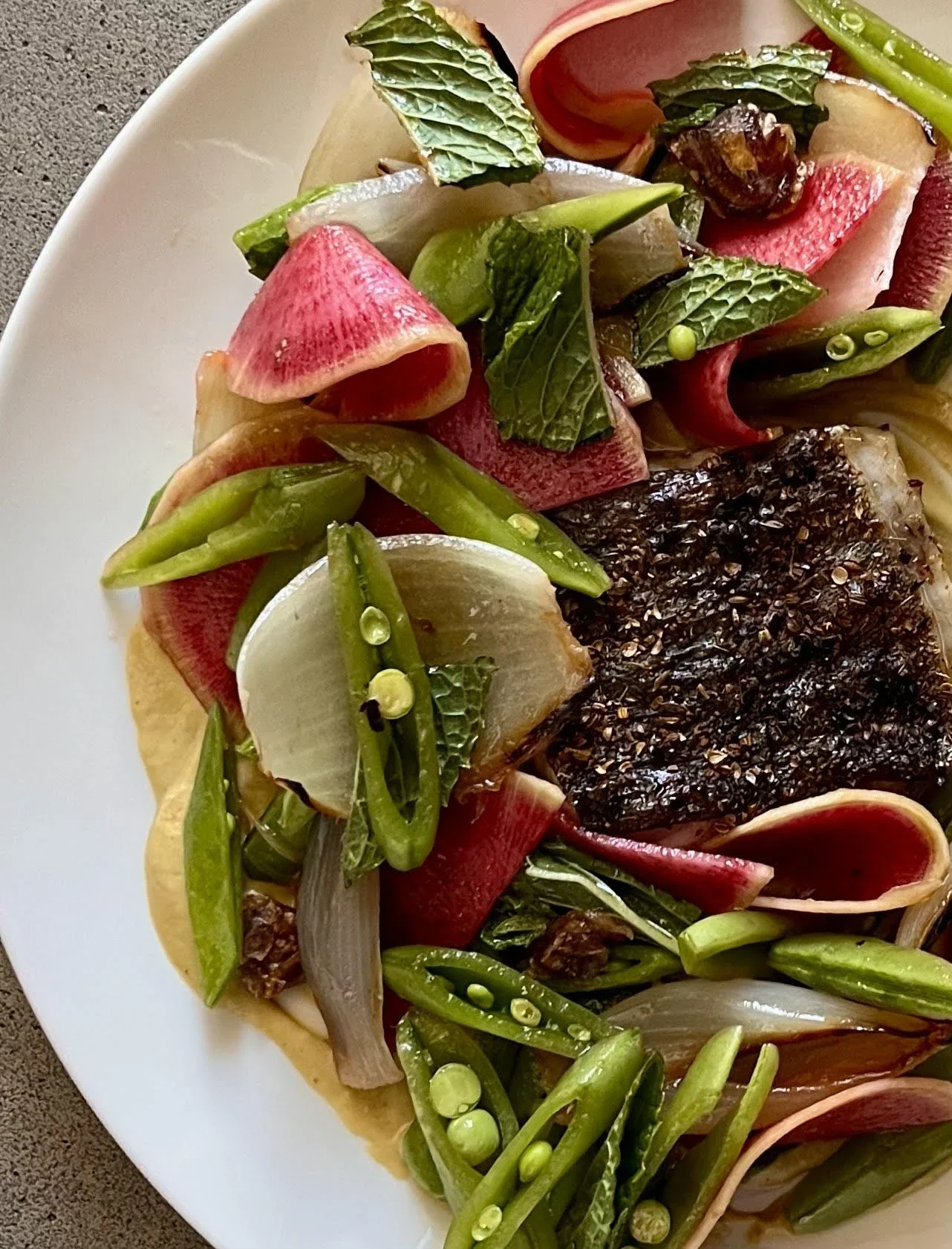
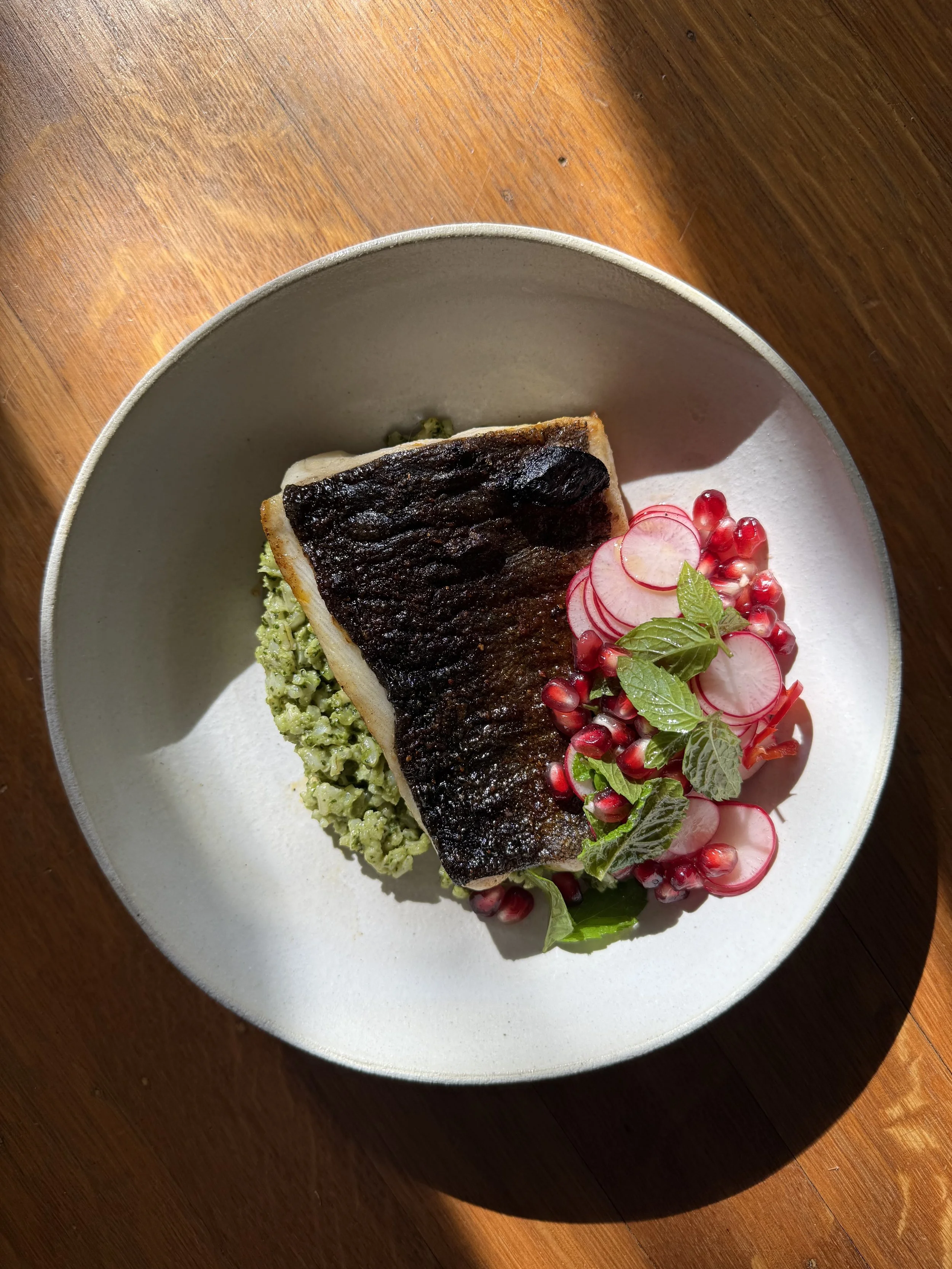
Blackened Black Cod with Cilantro Pesto Rice and Pomegranate
At least once a week, we eat some variation of fish, rice, and veggies. It’s comforting, nutritious, and relatively simple to pull together on a weeknight after work. Black cod holds up to heavy spice and high heat cooking. The pomegranate salad cuts through the richness.
Makes 2 cups
INGREDIENTS
For the rice
1 cup short grain brown rice
½ bunch cilantro
¼ cup pepitas (pumpkin seeds)
¼ cup extra virgin olive oil
1 garlic clove
1 tablespoon miso
1 lemon, zest only
For the fish
2 (6-ounce) black cod fillets, bones removed (see note)
½ teaspoon berbere (or spice mix of choice)
For the pomegranate salad
½ cup radishes, sliced
½ cup pomegranate seeds
¼ cup mint leaves
1 fresno chili, thinly sliced
2 teaspoons pomegranate molasses
1 tablespoon lemon juice
1 tablespoon olive oil
METHOD
Make the rice. Rinse the rice and add it to a pot, along with 2 cups of water and a pinch of salt. Bring to a simmer and cover. Turn the heat down to low and cook for 45 minutes. Remove from the heat and let it continue steaming for 10 minutes.
Season the fish. While the rice cooks, season the fish. Season with salt, berbere, and a drizzle of olive oil. Arrange on a sheet pan, skin side up, and set aside.
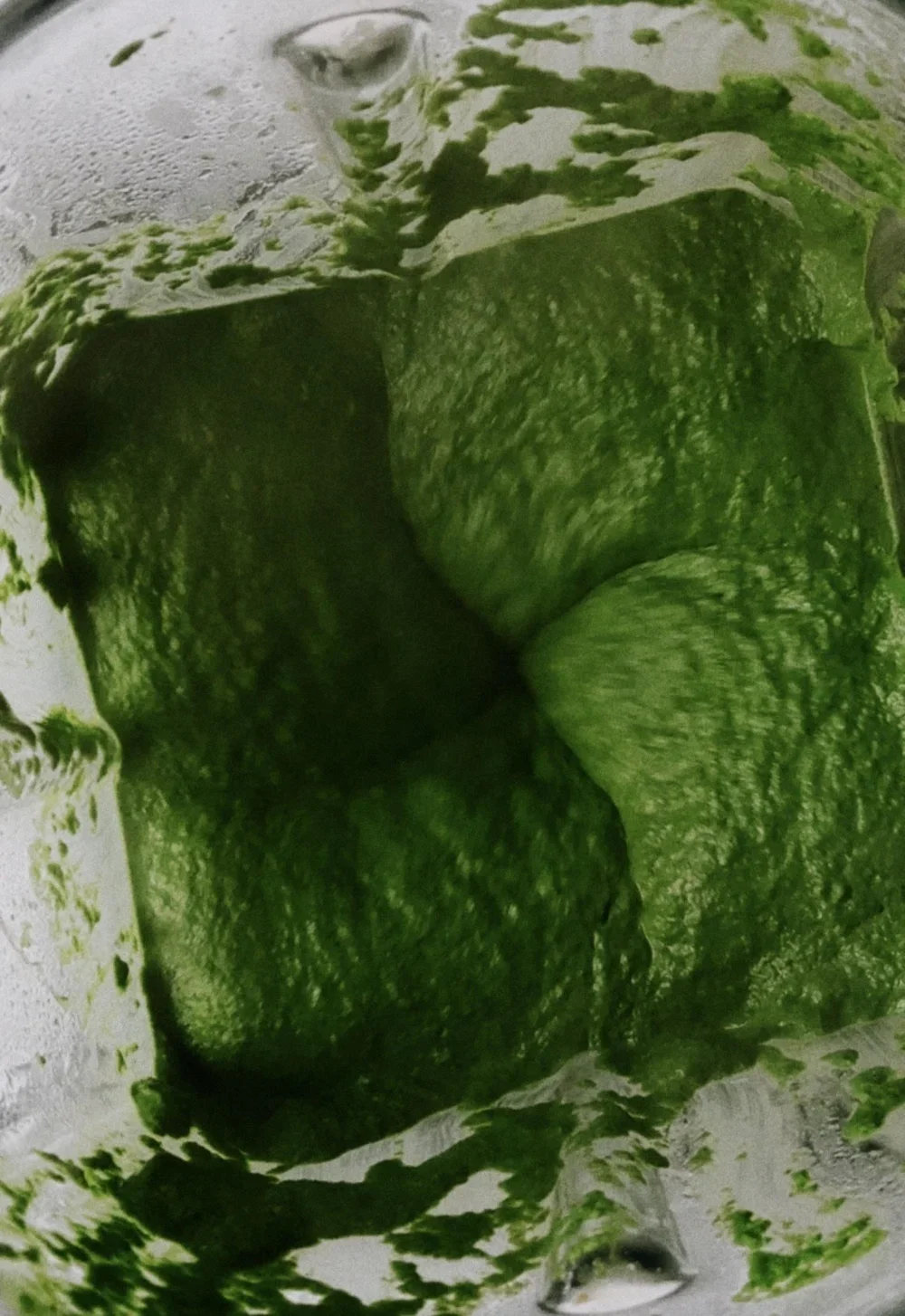
Make the pesto. While the rice cooks, make the pesto. Place the cilantro, pepitas, olive oil, garlic, lemon zest, and miso in a food processor and blend until smooth. You might need to add more olive oil to get a pesto-y consistency. Set aside until ready to serve.
Cook the fish. When the rice is done, preheat the broiler on high and position the top rack 6 inches below it. When the broiler is preheated, place the cod under it. The cod is cooked through when the skin is crispy and the flesh is opaque and flakey. If the skin is browning too fast, move the fish to a lower shelf in the oven.
Plate. Place a scoop of rice on the plate and top with the fish. Dress the pomegranate salad ingredients in a small bowl and scatter over the top of the rice and fish. Serve immediately.
Note: Use your finger to find the line of bones that runs down the fillet. Slice along either side of it, as close to the bones as possible. Cut all the way down to the skin but not through it. (After you remove the strip of bones, the skin will be the only thing holding it together.) If the bones don’t release easily, you may have to angle your knife further inward to scrape against the skin. Once you remove this strip, your filet will look like two sections of a hinge. That’s okay. As soon as it hits the pan, the flesh and skin will tighten up, making it appear as a unified filet.
FURTHER READING