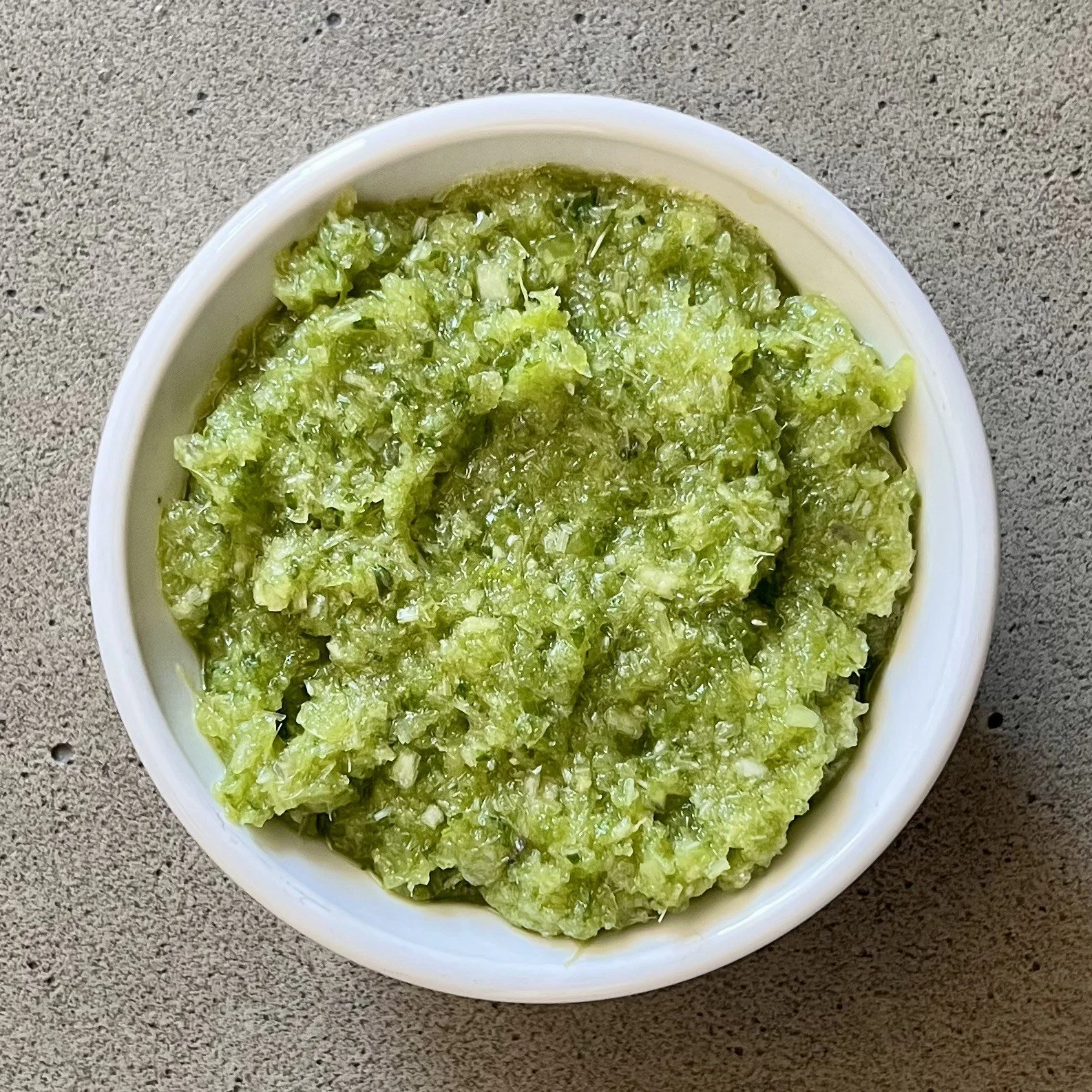
Green Curry Paste
A lot of the time, we see the store-bought versions are just as good. Not true with curry pastes. Make your own and taste the difference in depth, complexity, and freshness.
Makes 2 cups
INGREDIENTS
4 shallots, peeled
2 green bell peppers, seeded
6 serrano chili peppers, seeded
1 whole bulb garlic, peeled and smashed
2 ounces ginger, peeled and diced
1 bunch cilantro, stems only
6 makrut lime leaves
2 lemongrass stalks, thinly sliced (bottom half only)
2 teaspoons madras curry powder
1 teaspoon cumin
1 teaspoon white pepper
2 teaspoons coriander
2 teaspoons salt
kale leaves (optional) (see note)
METHOD
Rough chop the whole ingredients. Don’t spend too much time on this part. The goal is easy blending, not cosmetic appeal. For fibrous ingredients like ginger or lemongrass, cut across the grain to sever as many fibers as possible.
Blend into a fine paste. The best tool here is an immersion blender. The mixture is pretty dry, so a regular standing blender will have trouble (if you do use a standing blender, add a little water, or better yet, coconut milk, to facilitate blending). A food processor is too coarse. The traditional method is a mortar and pestle, but we only recommend this method if you have a large, heavy granite one (not the fun-sized marble one for small amounts of dry spices).
Use or store. Store in an airtight container in the refrigerator for up to 1 week. Better yet, use some to make a batch of curry. Keep track of how much you use (depending on how intense/spicy you like it). Then portion out the remaining paste and freeze.
Note: Green is a difficult color. Many ingredients we use for food coloring dull rather quickly (Thai basil, spinach, parsley, etc). Kale has such a rich color that it holds up pretty well. I like adding a few leaves (stems removed). Be mindful, though, as kale has a strong flavor of its own and will change the overall taste.