A Tale of Two Sauces
Sun and moon, Kirk and Spock, motion and rest. We’re surrounded by examples of yin and yang - the balance between opposing yet complementary forces. This is also a major principle for building sauces and designing dishes, where the concept of balance comes up a lot.
Sometimes a sauce is balanced internally. Nuoc cham is a great example (we love nuoc cham). With the trifecta of fish sauce, lime juice, and sugar already working together, there’s no pressing need for a partner.
We can also find balance in motion - letting separate components mingle on the plate while we eat. Garnishes - things like flakey salt, pickles, toasted nuts, fresh herbs - create pops of flavor and texture for us to encounter first. We can also vary texture within a dish. Ever put onion rings in a burger? When assembling a plate, consider how your guest is going to eat it. It’s fun to discover something creamy underneath something crunchy. Or something rich after something spicy. Check out Relae, one of our favorite cookbooks, for more examples of “hiding” the food.
Serving a dish with two complementary sauces is an easy way to create this kind of motion. Think about the classic ballpark frank: ketchup on one side and mustard on the other. We encounter them on their own first, so they pop separately - sweet and tangy - before mixing together as we eat. Oh, and the contrasting colors look pretty.
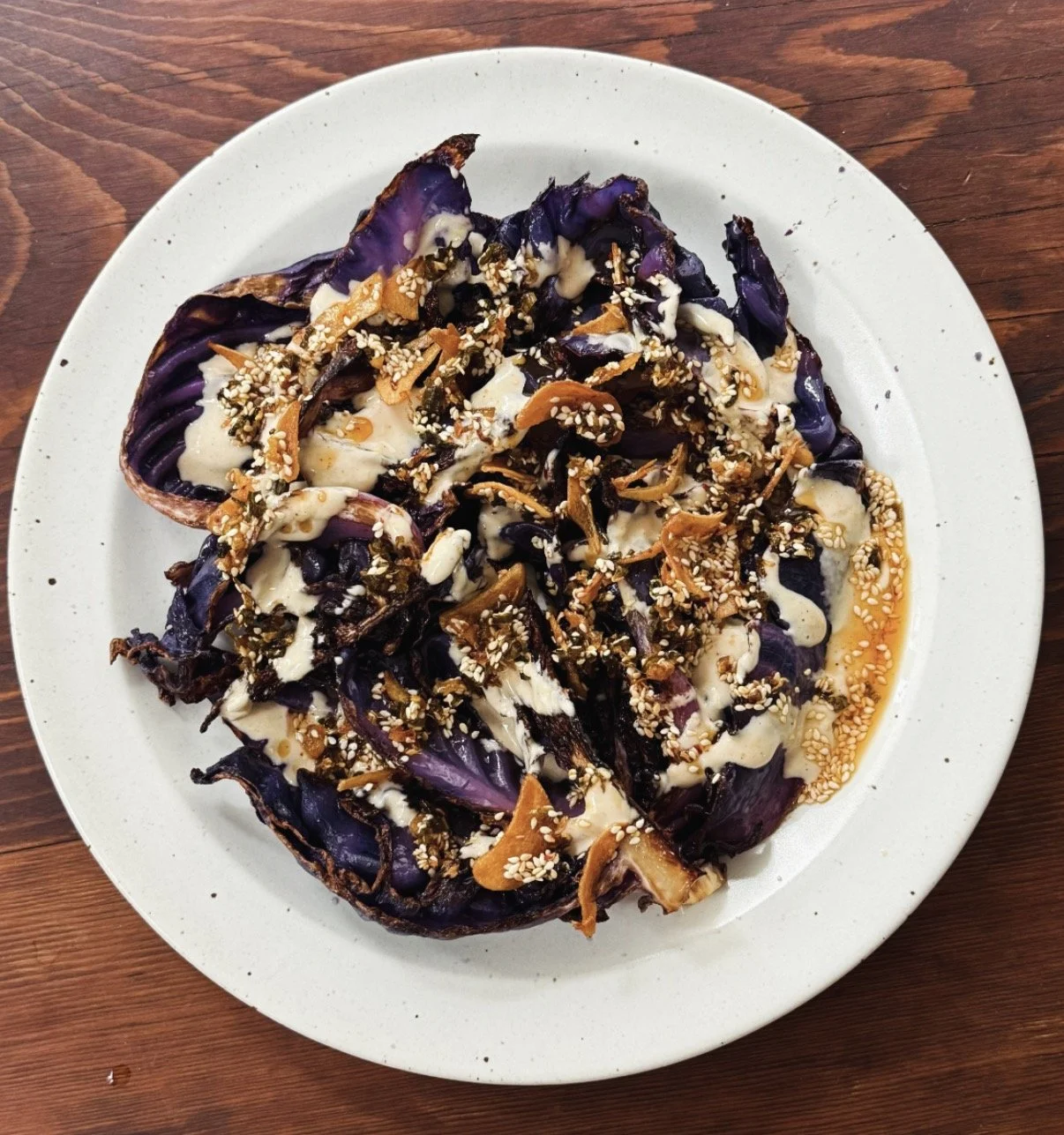
Options abound: chili crisp and mayo, peanut butter and jelly, oil and vinegar. Drizzling caramel and black sesame ganache on ice cream. This week we’re charring up some red cabbage and serving it with a spicy scallion chili oil and a creamy lemon tahini.
The synergistic power of two contrasting forces is also what drives Aster Pantry. Though not always for the better. Brainstorming this week’s newsletter, my mind went straight for A Tale of Two Sauces. With no hesitation, Mac fired off 2 Sauce 2 Furious, which, though possibly superior, channels an inferior sequel incapable of representing the concept of balance.
So, regulars, if you’ve got a better title for this week’s newsletter, shoot us a message. My next best option is The Sauce-father Part II…ouch.
We’re glad you’re cooking with us.
Cheers,
Sten and Mac
MEDIA SPOTLIGHT
Shokugeki No Soma. If you like the concept of motion in food, check out this anime. The title translates to Soma’s Food Wars. Our hero is a regular kid who works with his dad at a regular diner and then ends up attending a fancy culinary school full of rich snobs. Hijinks ensue. Fair warning, it’s ridiculous. And pretty much every time the characters taste mindblowingly good food (which is often), their reactions are comically orgasmic. Haven’t you ever tasted anything so good that it blew your clothes right off? Metaphorically, of course.
I almost forgot my point. Beyond excellent themes about the power of teamwork and learning from failure, the best part is that they usually explain how the food works. I was pretty skeptical of the show until our hero made this transforming furikake rice. Basically he finishes a simple egg and rice bowl with chilled cubes of reduced chicken stock. They melt over the hot food as you eat. Motion in food. Pretty fun.
BOOKSHOP.ORG
Aster Pantry now has its own shop on bookshop.org! If you just watched Soma slap the haters with his transforming furikake rice bowl and are all fired up about motion in food, it’s a great time to browse through our favorite cookbooks. Most of the chefs we admire pay just as much attention to how flavors are assembled as they do to creating them in the first place. If you’re in the Seattle area, we also recommend buying cookbooks IRL at Book Larder in Fremont.
EXPLORE MORE