Surf & Turf
Dark mahogany, red leather, and clouds of cigarette smoke. Filet mignon, lobster tail, and four martinis. Just a light lunch before Roger and Don head back to the office. That’s the vibe I associate with surf & turf. An expression of nouveau riche extravagance from a bygone era.
But it’s not all fedoras and suffocating gender roles. As with any trend long past its expiration date, there’s inspiration to be found in the underlying principles. Surf & turf is all about indulgence - doubling down on umami and contrasting strong flavors.
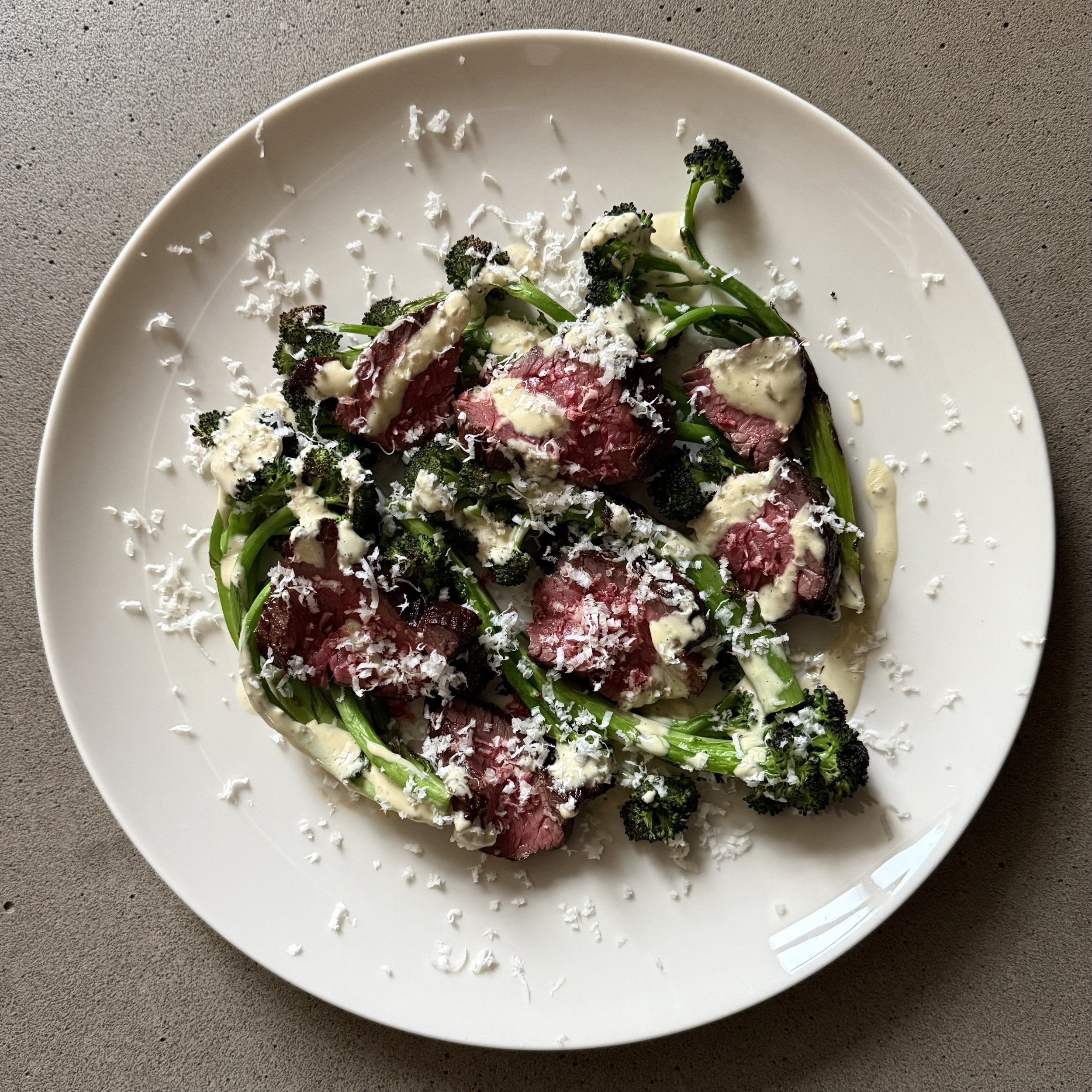
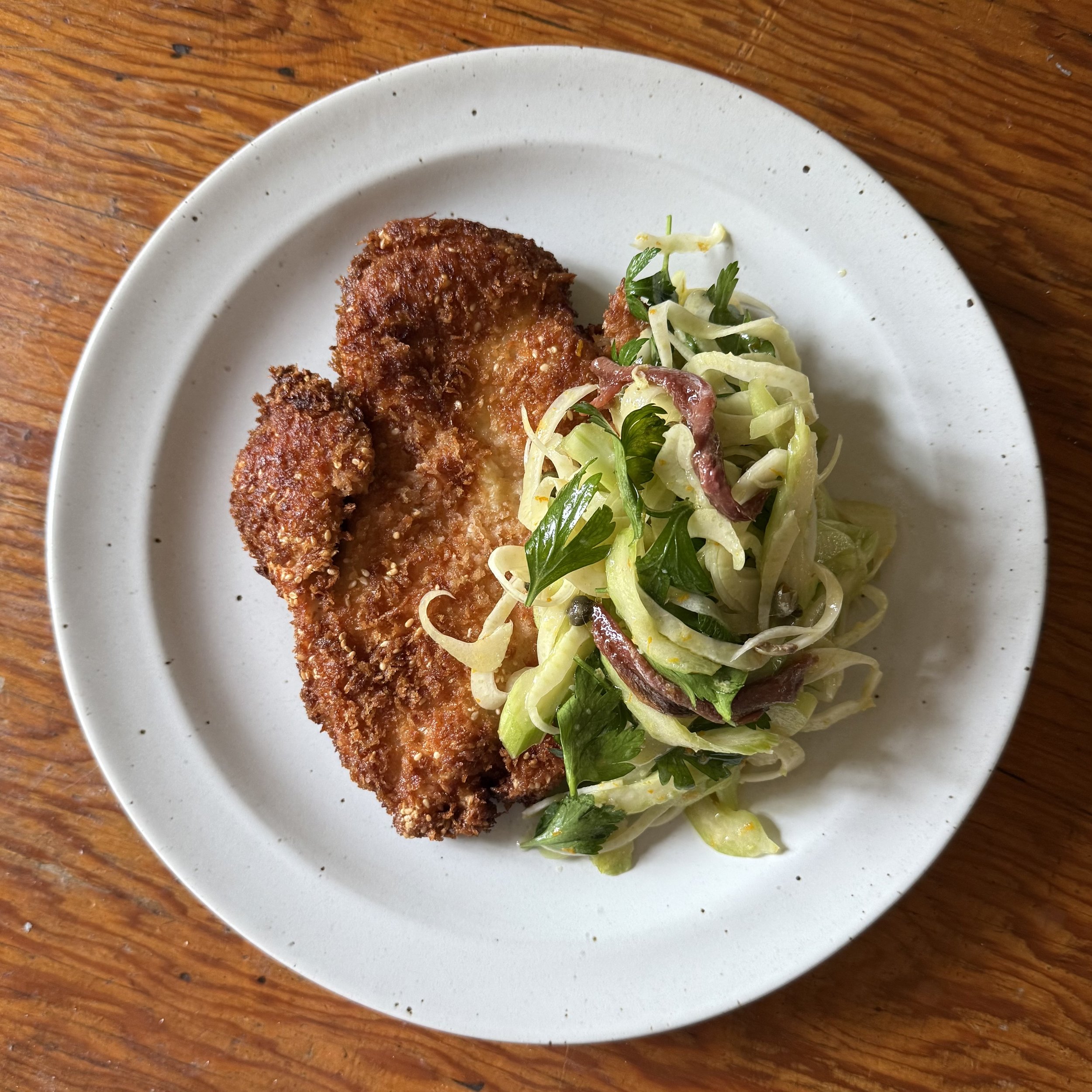
Let’s take a step back from dinner specials at Red Lobster and think broadly about collaborations of land and sea. Classic clam chowder gets a big boost from bacon. Y’all know how much Mac and I love tinned fish: steak and tonnato and fried chicken and anchovy play very well together.
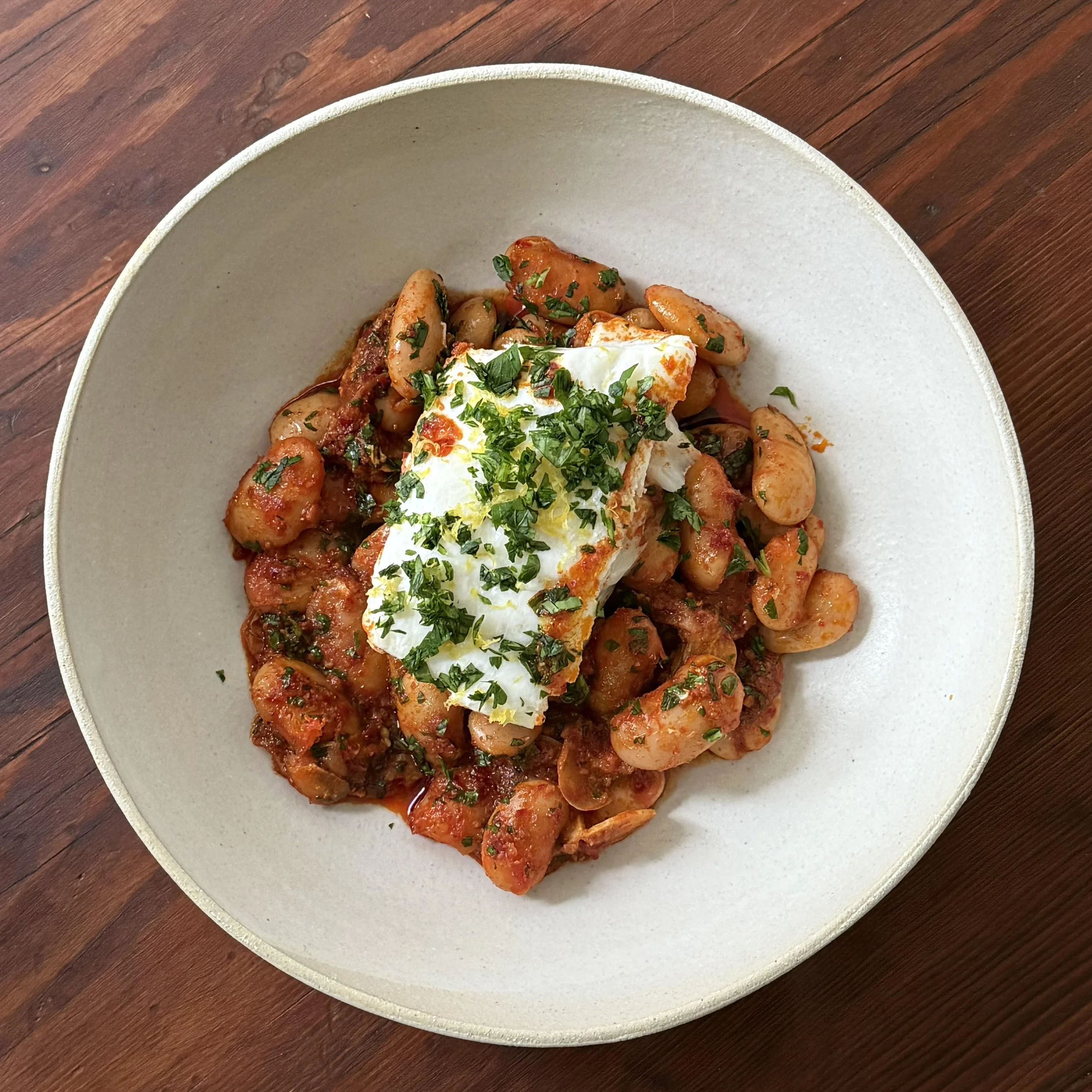
One of our absolute favorite pairings is grilled pork and nước chấm, the foundational Vietnamese dipping sauce of fish sauce, lime juice, and sugar. This week we’re serving cod filets on top of beans amped up with a little spicy ‘ndjua sausage. Recipe drops on Friday.
There’s a common technique at work in all these dishes: amplifying a primary ingredient with a smaller quantity of a stronger one, often something concentrated through curing or fermentation.
This principle also applies to more vegetable-forward cooking. For those who eat meat but want to make vegetables the star of the show, consider using a small amount of an animal product as the seasoning for a vegetable. All brassicas get a boost from anchovy. We can reinforce pasta dishes with guanciale and parmesan. And don’t forget fermented vegetable products like miso or toban djan, which can really amplify a vegetable puree.
Always be looking for ways to deepen and contrast flavors.
We’re glad you’re cooking with us.
Cheers,
Sten and Mac
RESTAURANT LINGO
Always Be... Mac and I begin a lot of aphorisms with “always be…” Always be tasting is a really important one. Constantly tasting as you cook and adjusting the seasoning based on your taste is one of the best ways to improve your cooking.
The original is always be closing. ABC. Originally it was a sales mnemonic (always be closing deals). An excoriating monologue by Alec Baldwin in the 1992 movie Glengarry Glen Ross enshrined the phrase in popular culture. Then we restaurant folk got a hold of it.
For us it’s about using any extra moment to get a jump on shutting down the kitchen: always be closing the shop. If you have a break in your cooking project, use the time to clean your workspace and bust out a few dishes - your future self always appreciates it.
RELATED RECIPES